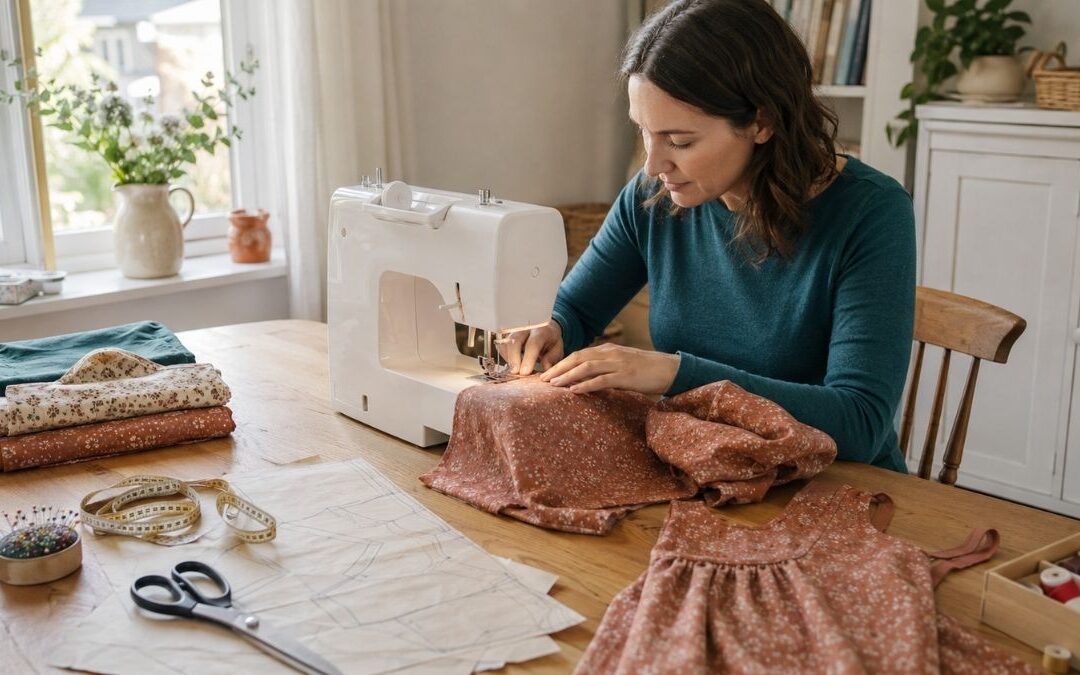
Dressmaking for beginners does not require a studio, an expensive machine or years of sewing experience. If you are wondering how to start dressmaking, you need only a few reliable tools, a simple pattern and the patience to learn one skill at a time.
Making your own clothes can feel daunting when you first look at a paper pattern or sit in front of a sewing machine. Once you break the process into smaller stages, however, it becomes far more manageable. This guide explains what you genuinely need, which skills to learn first and how to choose a first project that you have a realistic chance of wearing.
Dressmaking for beginners: where to start
Dressmaking is the process of turning fabric into a wearable garment. It brings together several practical skills, including taking measurements, understanding patterns, cutting accurately, sewing seams and creating a good fit.
You do not need to master all of these before you begin. In fact, waiting until you feel fully prepared is one of the easiest ways never to start. A better approach is to choose a straightforward garment and learn the techniques needed to complete it.
Your first aim is not to produce a flawless outfit. It is to understand how a garment comes together. Each project then gives you a stronger base for the next one.
Can you learn dressmaking at home?
Yes. Dressmaking is well suited to home study because you can practise each technique at your own pace. You can pause when something needs unpicking, repeat a seam and return to your project when you have time. This makes it practical to learn dressmaking at home, even if you can only set aside short periods each week.
The challenge is not where you learn, but how. Random tutorials can answer individual questions, yet they do not always show which skills to learn first. A structured course gives you a clear route through the subject and access to help when the result does not match the instructions.

What equipment do dressmaking beginners need?
It is easy to spend heavily on sewing equipment before you know what you will use. Start with a small, dependable kit:
- a domestic sewing machine with a straight stitch and zigzag stitch;
- sharp fabric scissors that are not used for paper;
- small scissors or thread snips;
- a flexible tape measure;
- dressmaking pins or fabric clips;
- hand-sewing needles;
- matching all-purpose thread;
- tailor’s chalk or another removable fabric marker;
- a seam ripper;
- an iron and ironing board.
The iron is not an optional extra. Pressing seams as you work helps them sit neatly and can make a basic garment look much better finished.
You also need a flat surface for laying out and cutting your fabric. A dining table is perfectly adequate. Good lighting matters more than having a dedicated sewing room.
Choosing your first sewing machine
A beginner does not need a machine with dozens of decorative stitches. Look for one that is straightforward to thread, has clear controls and allows you to adjust stitch length. If possible, try the machine before buying it or choose a model with reliable local servicing and spare parts.
Read the manual and practise threading, winding a bobbin and sewing straight lines on spare fabric before starting a garment. Ten minutes spent learning how the machine behaves can prevent a great deal of frustration later.
Learn these dressmaking skills first
Beginners often focus on the finished garment and rush through the foundations. These are the skills worth practising first:
- Threading the machine correctly. Many apparent machine faults are caused by incorrect threading or an unsuitable needle.
- Sewing an accurate seam allowance. Even seams make it much easier for pattern pieces to fit together.
- Backstitching. Securing the beginning and end of a seam helps stop it coming undone.
- Pressing seams. Press each seam as directed before joining the next pieces.
- Finishing raw edges. A zigzag stitch is often enough for an early project and helps reduce fraying.
- Unpicking calmly. Every dressmaker uses a seam ripper. Correcting a mistake is part of sewing, not proof that you cannot do it.
Practise on scraps from your chosen fabric. Different materials feed through a machine differently, so a test piece also helps you check the needle, thread tension and stitch length.
How to choose a beginner sewing pattern
Choose a pattern designed specifically for dressmaking beginners. Look for simple shaping, few pattern pieces and clear instructions. Pull-on skirts, loose-fitting tops and elasticated pyjama bottoms are usually more forgiving than a fitted jacket, tailored trousers or a dress with several fastenings.
Pattern sizes are not always the same as the sizes used by high-street shops. Measure your bust, waist and hips, then use the pattern’s own size chart. If your measurements fall between sizes, read the guidance supplied with the pattern before cutting.
A sewing pattern normally includes:
- a size and measurement chart;
- fabric suggestions and the amount required;
- a list of notions, such as elastic, buttons or a zip;
- a cutting layout;
- markings that help you align the pieces;
- a seam allowance;
- step-by-step construction instructions.
Read the full pattern before cutting anything. You do not need to understand every instruction immediately, but you should know the order of the main stages and spot any unfamiliar techniques in advance.
Choose fabric that is easy to work with
Your choice of fabric can make a simple pattern easy or surprisingly difficult. For a first garment, a stable woven cotton or cotton-linen blend is usually easier to measure, cut and control than a slippery, sheer or stretchy material.
Check the fabric recommendations on the pattern. The same design can hang very differently depending on the weight and movement of the cloth. If the pattern calls for a woven fabric, replacing it with stretch jersey may change the fit and the way it must be sewn.
Wash, dry and press washable fabric before cutting it. This allows any initial shrinkage to happen before you invest time in making the garment.
Do not skip the test version
If fit matters, make a trial version in inexpensive fabric before cutting into something special. This is often called a toile. It allows you to check the length, width and overall shape without being afraid to make changes.
Your first dressmaking project, step by step
- Take accurate body measurements. Wear light clothing and keep the tape measure level without pulling it tight.
- Select the pattern size. Use the pattern chart rather than your usual shop size.
- Prepare the fabric. Pre-wash it if appropriate, then press out creases.
- Prepare the pattern. Identify the correct size lines and every piece required for your chosen version.
- Lay out and pin carefully. Follow the grainline and cutting layout shown in the instructions.
- Transfer the markings. Darts, notches and placement marks help the garment fit together correctly.
- Sew in the stated order. Resist the urge to jump ahead, even when a later step looks more interesting.
- Try the garment on as you go. It is easier to adjust fit before seams and hems are fully finished.
- Press and finish. Give the completed garment a final press, following the care needs of the fabric.
If a stage goes wrong, stop before continuing. Check the pattern, compare the two sides of the garment and unpick the seam if needed. Sewing more stitches over a mistake rarely hides it.
Common dressmaking mistakes to avoid
Starting with a difficult garment
A complicated first project may look exciting, but it can demand several skills you have not yet practised. Complete a simpler garment first and build confidence through progress.
Choosing fabric for colour alone
Colour matters, but the weight, stretch and drape of the material affect whether it suits the pattern. Follow the fabric guidance until you understand how different cloth behaves.
Cutting before checking measurements
Once fabric has been cut, your options narrow quickly. Measure carefully, check the pattern size and confirm that every piece is placed correctly before picking up the scissors.
Ignoring the grainline
The grainline shows how each pattern piece should sit on the fabric. Poor alignment can make a garment twist or hang unevenly.
Expecting handmade to mean perfect
Your early garments will teach you more than they impress you. Notice what worked, record what you would change and use that knowledge on the next project.
Build from sewing skills to original designs
Following a pattern teaches you how garment pieces, seams and shaping work together. As your skills grow, you can learn to alter fit, change design details and develop more original ideas.
Making, altering and repairing clothes can also help keep garments in use for longer. The climate action organisation WRAP reports that repairing clothing can extend its lifespan, making sewing a useful skill as well as a creative one. Read more about the benefits of clothing repair and reuse.
If you want a clear route from the basics into garment construction, Regent Academy’s beginner Fashion Design and Dressmaking Course 1 helps you develop your knowledge through flexible distance learning. You can study from home and draw on experienced tutor support when you need guidance.
Once you are ready to develop your knowledge and practical skills further, Fashion Design and Dressmaking Course 2 provides the natural next stage. You can also enrol on both courses together and save £145.
Dressmaking for beginners FAQs
What should a dressmaking beginner learn first?
Start by learning to thread your machine, sew an accurate seam allowance, secure and press seams, and finish raw edges. Practise on spare fabric before using these skills to make a simple garment.
Can I start dressmaking if I have never used a sewing machine?
Yes. Begin by learning how to thread the machine, wind the bobbin and sew straight lines on spare fabric. Practise these basics before starting your first garment.
What is the easiest garment for a beginner to make?
A loose-fitting top, simple pull-on skirt or elasticated pyjama bottoms can make a suitable first project. Choose a pattern labelled for beginners, with few pieces and no complex fastenings.
Do I need an expensive sewing machine for dressmaking?
No. A reliable domestic machine with straight and zigzag stitches is enough for many beginner projects. Ease of use and dependable servicing matter more than a long list of decorative functions.
How long does it take to learn dressmaking?
There is no fixed timescale. You can learn the basic process through one simple garment, but accurate fitting and more advanced construction take continued practice. Regular short sewing sessions are often more useful than waiting for a full free day.
Can I learn fashion design and dressmaking from home?
Yes. Home study lets you practise techniques and complete projects at a pace that fits around other commitments. A structured course and tutor support can provide direction when you are unsure what to learn next.
What is the difference between sewing and dressmaking?
Sewing is the broader skill of joining or repairing fabric. Dressmaking applies sewing skills specifically to creating garments, with added focus on patterns, body measurements, construction and fit.
Take our dressmaking for beginners course
Ready to turn your ideas into clothes you can actually wear?
Explore Regent Academy Fashion Design and Dressmaking Course 1 and start learning from home.
Related Articles

5 Practical Ways to Make Money From Your Hobby at Home
Learn how to make money from your hobby with practical steps on choosing an offer, testing demand, pricing your work and tax basics.
Home Study Fashion Design Courses
Unlock Your Creativity with Fashion Design Courses at Regent Academy Embarking on a journey into the world of fashion design is both exciting and rewarding. Whether you're a novice or looking to enhance your existing skills, choosing the right course is crucial....